Zero-Destruction Migration: A Hotel Story
A visual story about migrating Terraform modules from a vendor’s licensed format to our own, without destroying a single resource.
Our infrastructure is a hotel. Every room is governed by a card on the wall that declares exactly what the room must contain. Housekeeping follows one rule, no questions asked: make the room match the card. That rule is what keeps the hotel consistent, and it’s also what makes a careless migration dangerous.
This visual essay is also available as a standalone project on GitHub.
The Cast
| Character | Costume | Plays the role of |
|---|---|---|
| Housekeeping | apron | Terraform: reconciles rooms to cards, literally and without judgment |
| Engineer | lanyard badge | You, the platform engineer: reads rooms, writes cards, delivers fixes |
| Vendor | delivery cap | The third party (NTC): owned the old licensed card format |
| Guest | bowtie | Live workloads: asleep in the room the whole time, must never be disturbed |
Ink grammar throughout: blue = guidance, orange = attention, red = danger.
Act I: How the Hotel Works
1. Cards govern rooms
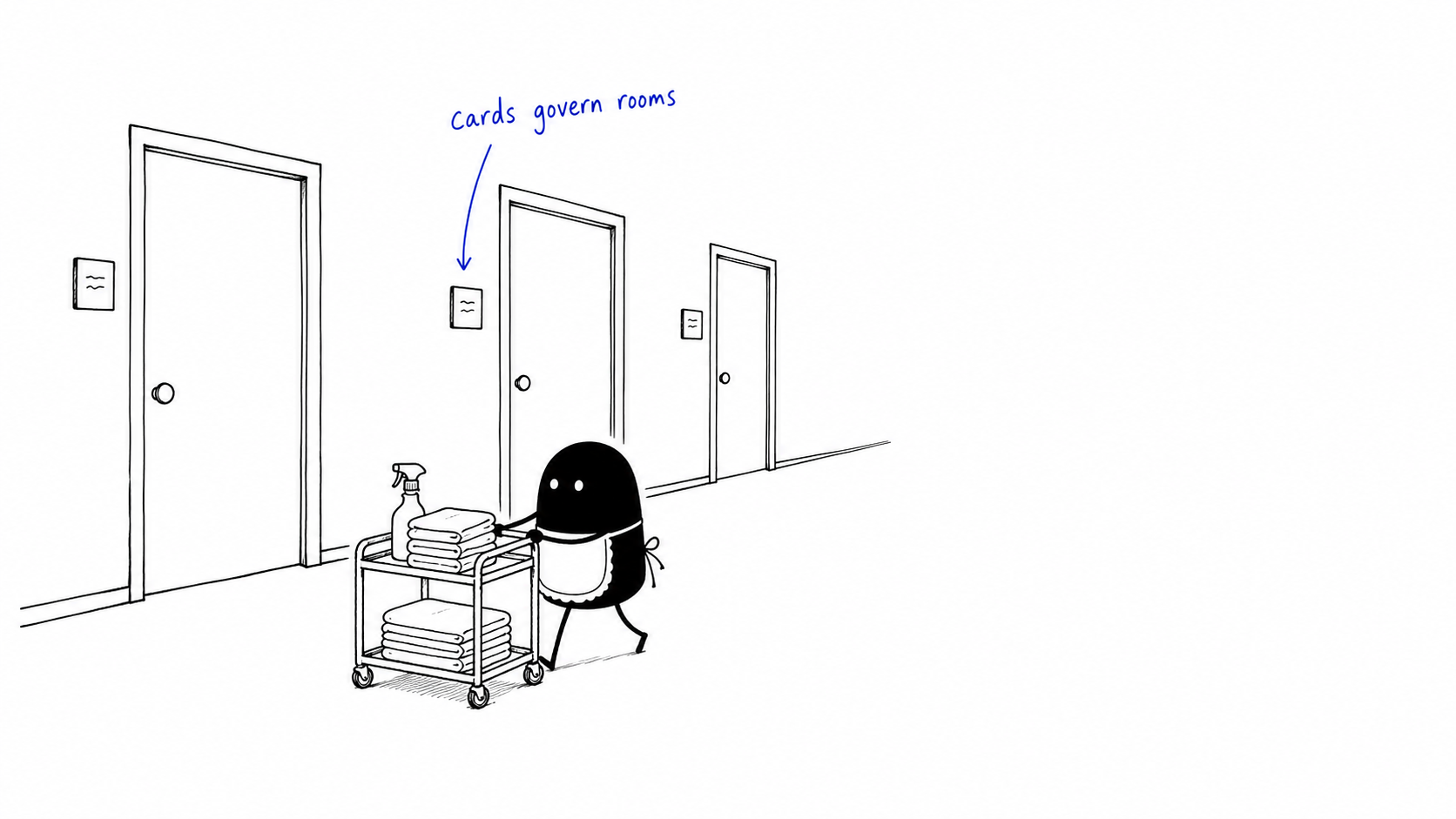
Housekeeping walks the corridor. Every door has a card. The cards are the single source of truth. Nobody remembers what a room “should” have; they read it.
Terraform: infrastructure is declared in code. The declaration, not tribal knowledge, defines the desired state.
2. Make the room match the card
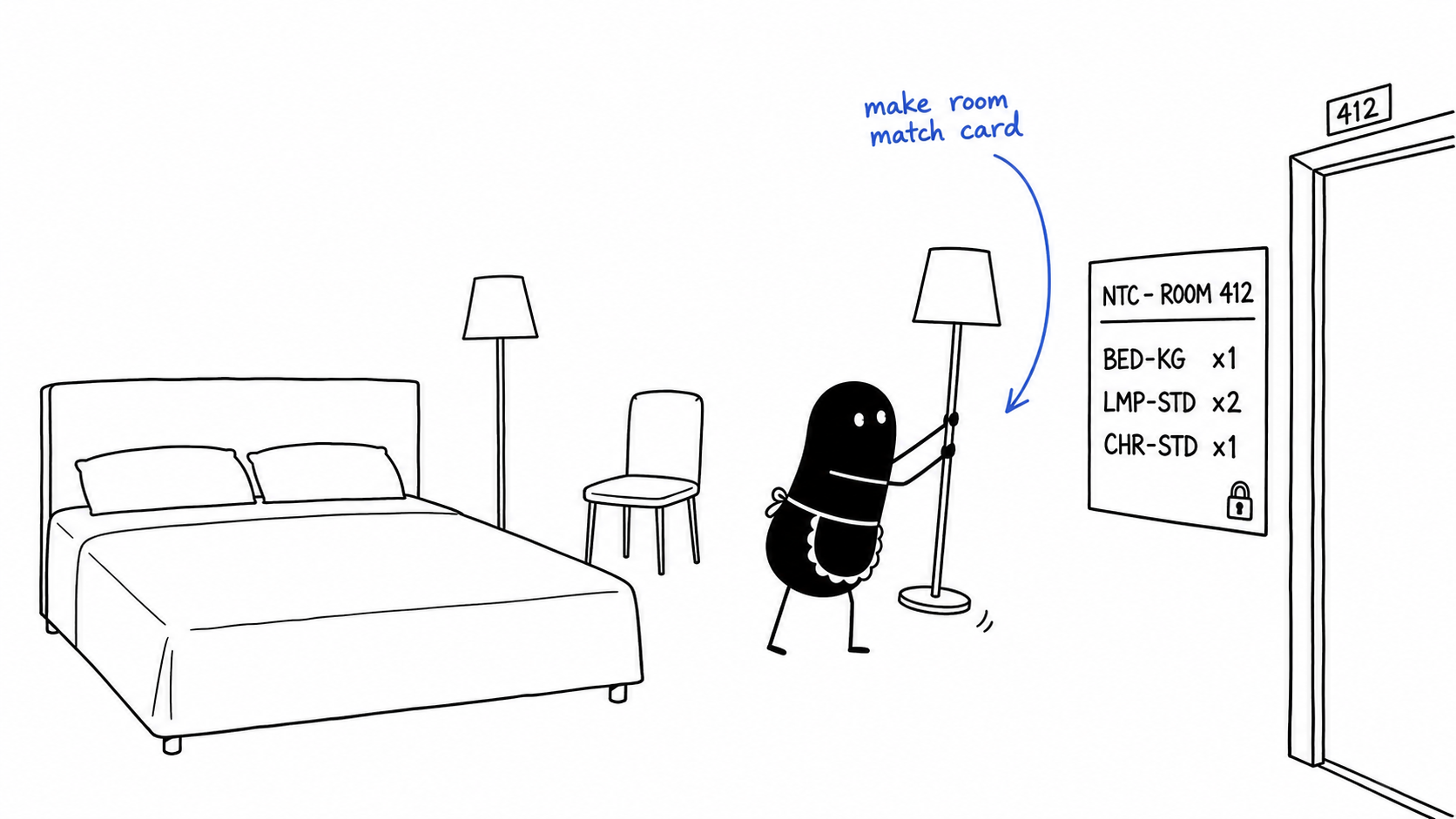
Room 412’s card (in the vendor’s licensed NTC format, padlock and all) says BED-KG x1, LMP-STD x2, CHR-STD x1. Housekeeping places the second lamp. Bed ✓, chair ✓, lamps arriving. Reconciliation in its constructive direction: reality is built up to match the declaration.
Terraform:
terraform applycreating resources to satisfy the configuration. TheNTCcard is the vendor’s licensed module.
3. Workloads move in
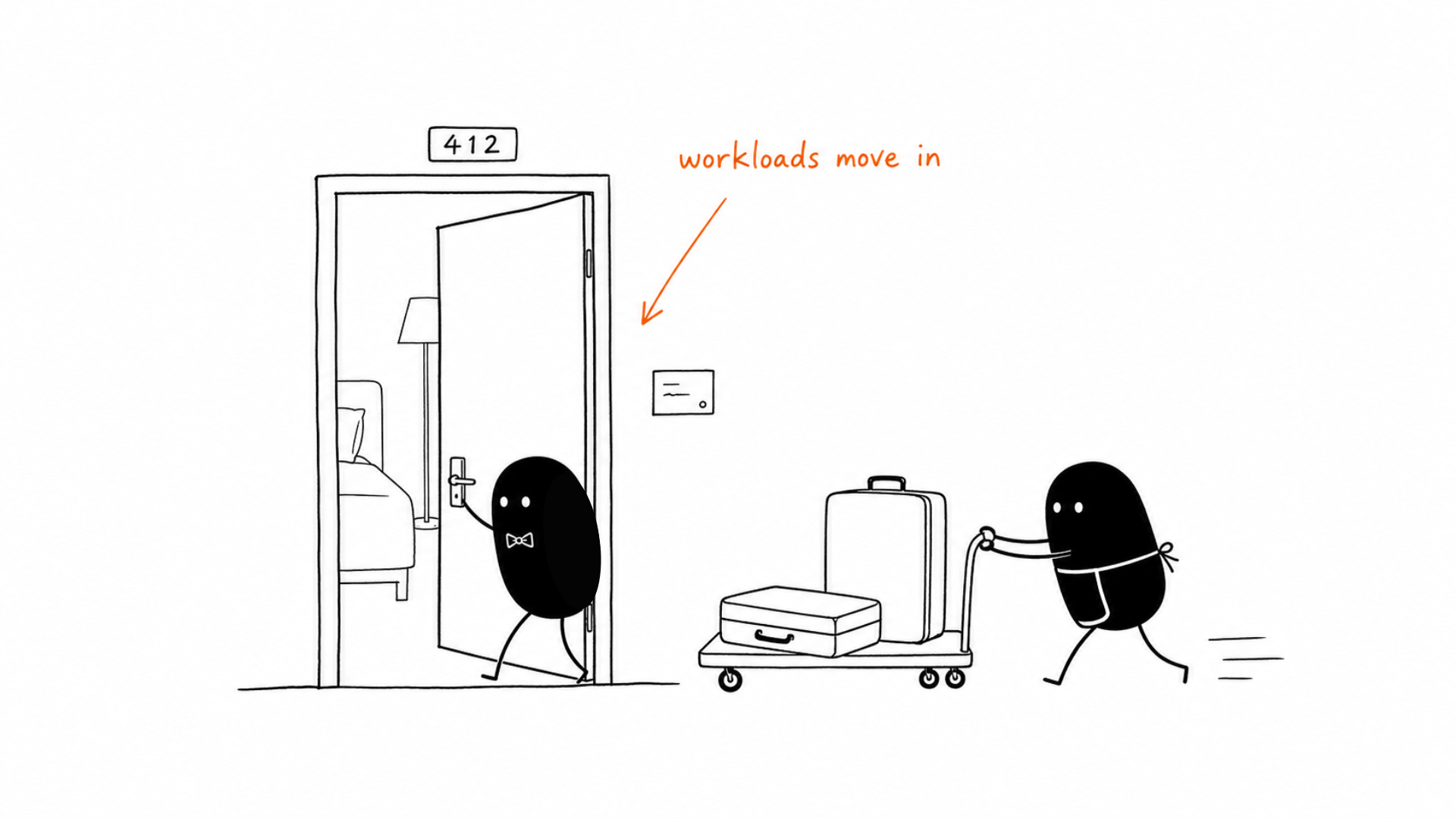
The guest checks in; housekeeping wheels the luggage. The room is no longer just furniture. It’s occupied. From this moment on, every change to the room happens with someone living in it.
Terraform: production workloads land on the provisioned infrastructure. Terraform manages the furniture (resources), not the guest (data and running services), but a destroyed room takes the guest down with it.
Act II: The Vendor Leaves
4. The card walks out the door
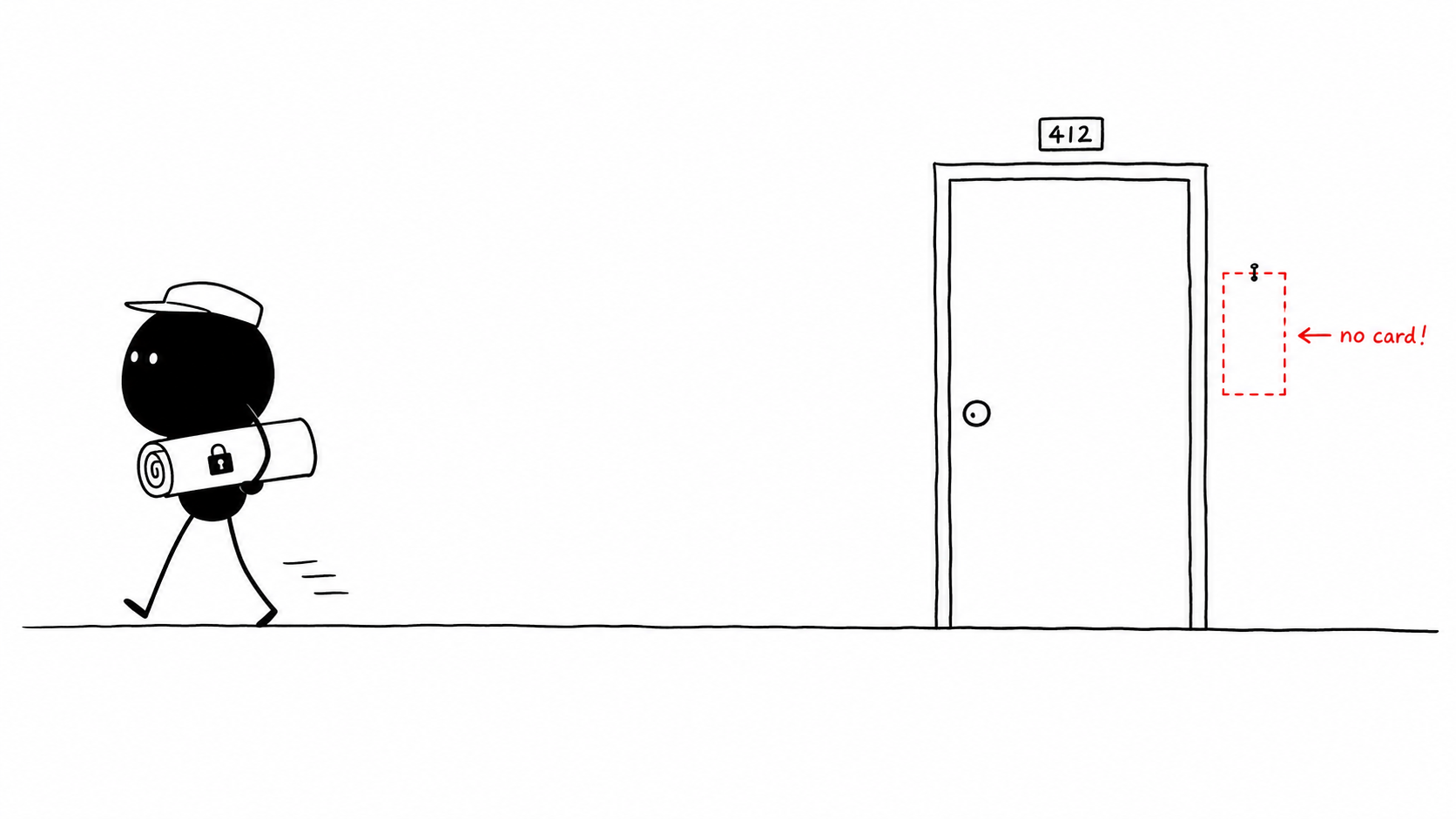
The contract ends. The vendor rolls up the NTC card (padlock facing outward) and leaves. On the wall: a dashed red outline where the source of truth used to hang. The guest sleeps behind a closed door, unaware.
Terraform: the licensed modules are gone. No source, no reference. But the infrastructure they described is still live.
5. How do I know what’s right?
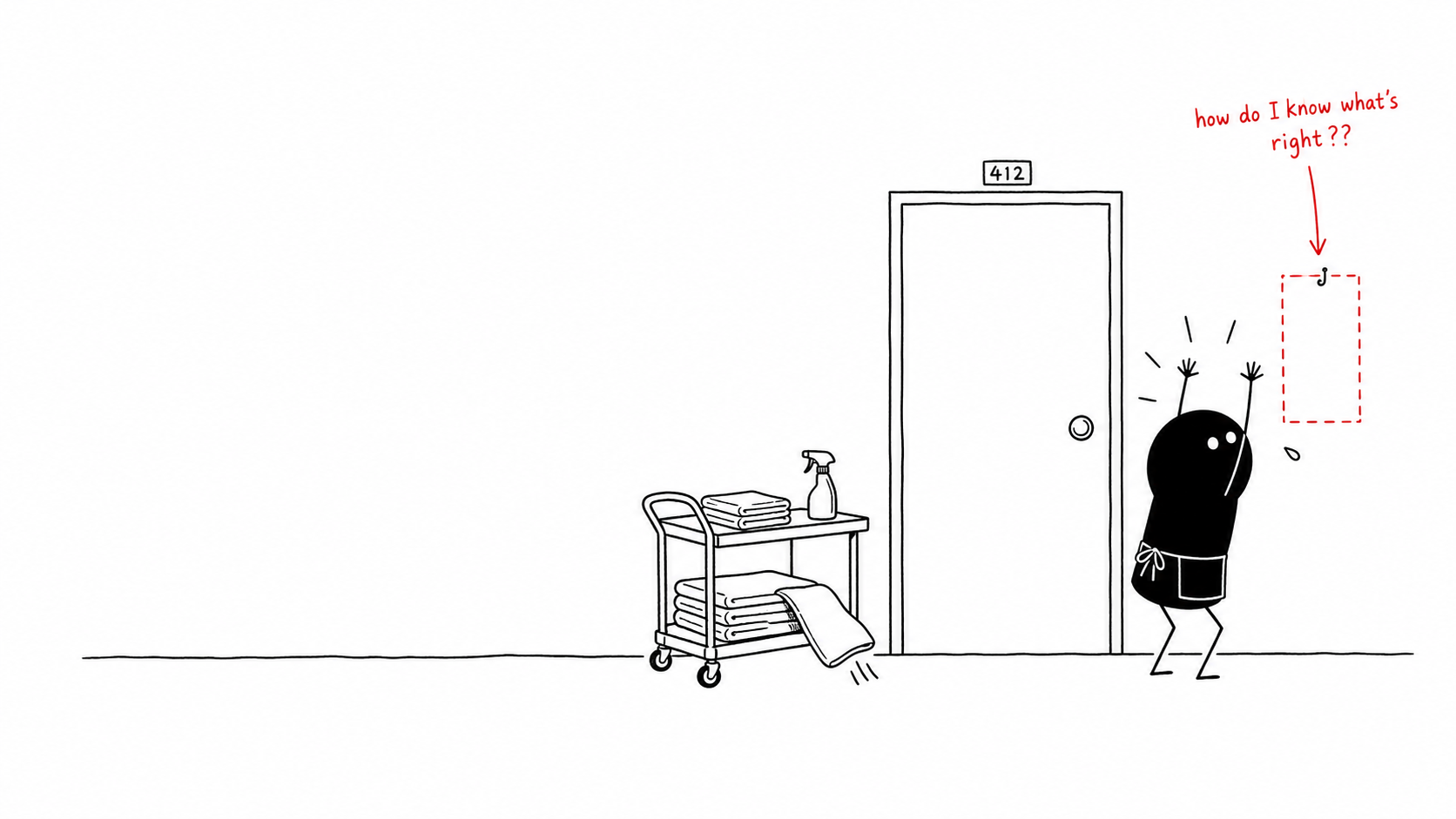
Housekeeping arrives for rounds and finds nothing to follow. Cart abandoned, arms up. The tool has no state to reconcile against.
Terraform: configuration referencing modules you can no longer read. The tool cannot answer “is this room correct?” without a declaration to compare it to.
6. The room IS the reference
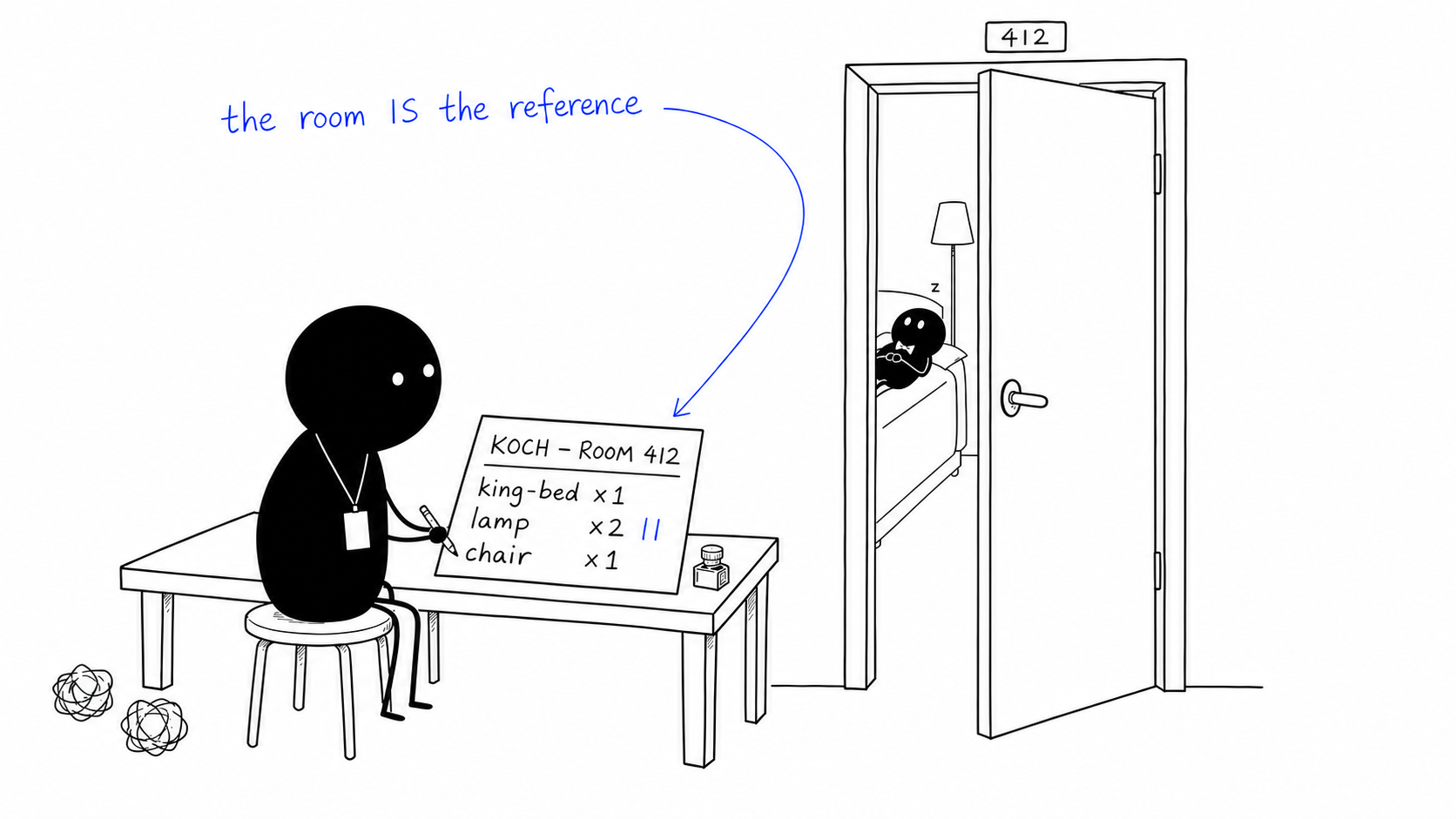
Enter the engineer. No old card to copy, so the room itself becomes the source. Peeking politely through the ajar door, counting furniture, writing the new KOCH card: king-bed x1, lamp x2, chair x1. Same room, new format, derived from reality.
Terraform: rebuilding modules by reading live infrastructure:
terraform import, state inspection, writing config that describes what actually exists. The answer to “no reference” is: production is the reference.
Act III: The Trap
7. Same bed, two names
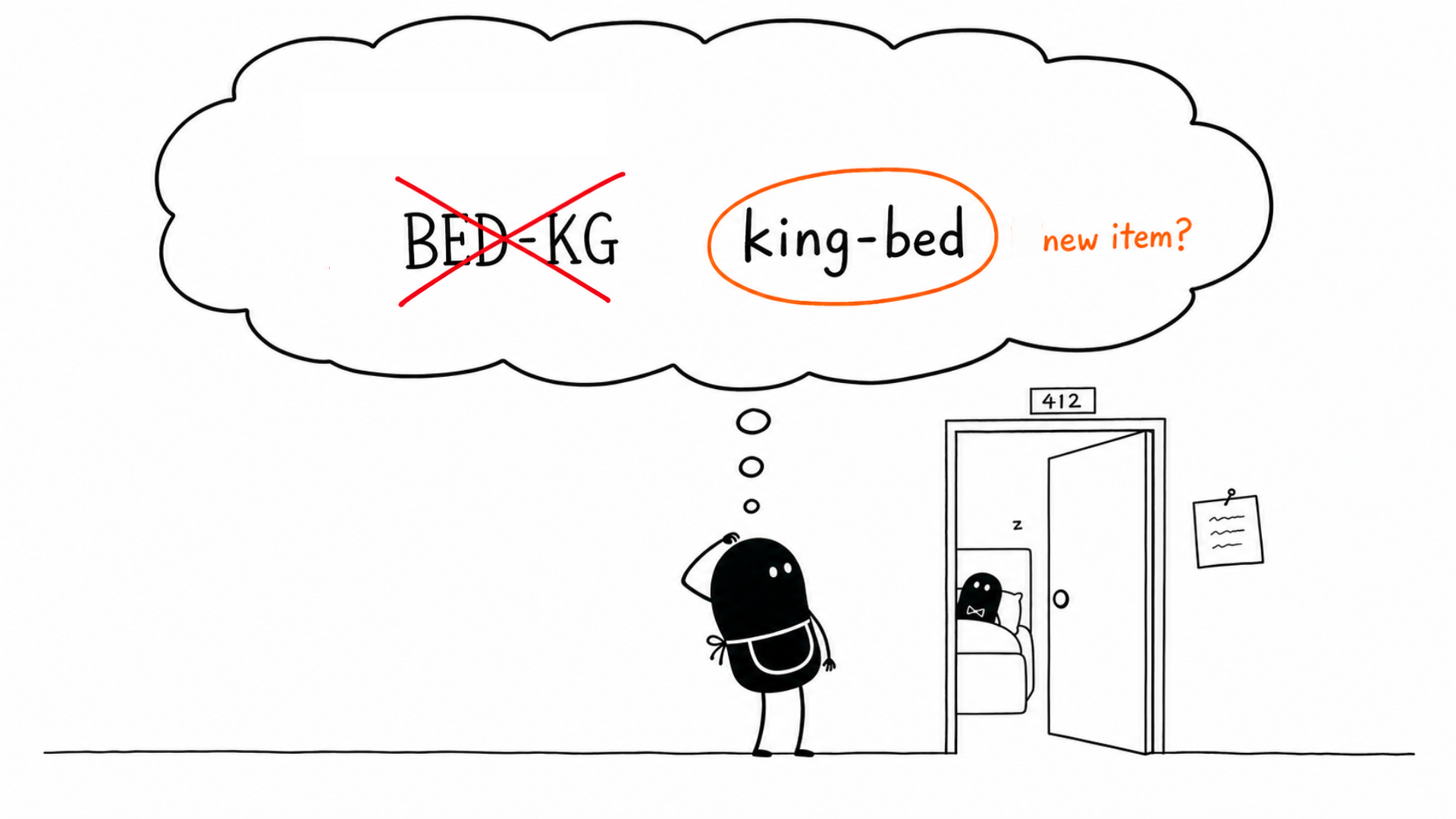
The new card goes up. Housekeeping reads it and sees a diff: BED-KG is gone, king-bed is new. It cannot tell that two names describe one bed. The actual bed is faintly visible through the ajar door the entire time; the confusion exists only on paper.
Terraform: resources moved to new modules get new addresses.
module.ntc.bed_kgvanished,module.koch.king_bedappeared. To the tool, a renamed resource is a deleted resource plus a created one.
8. What the plan would do
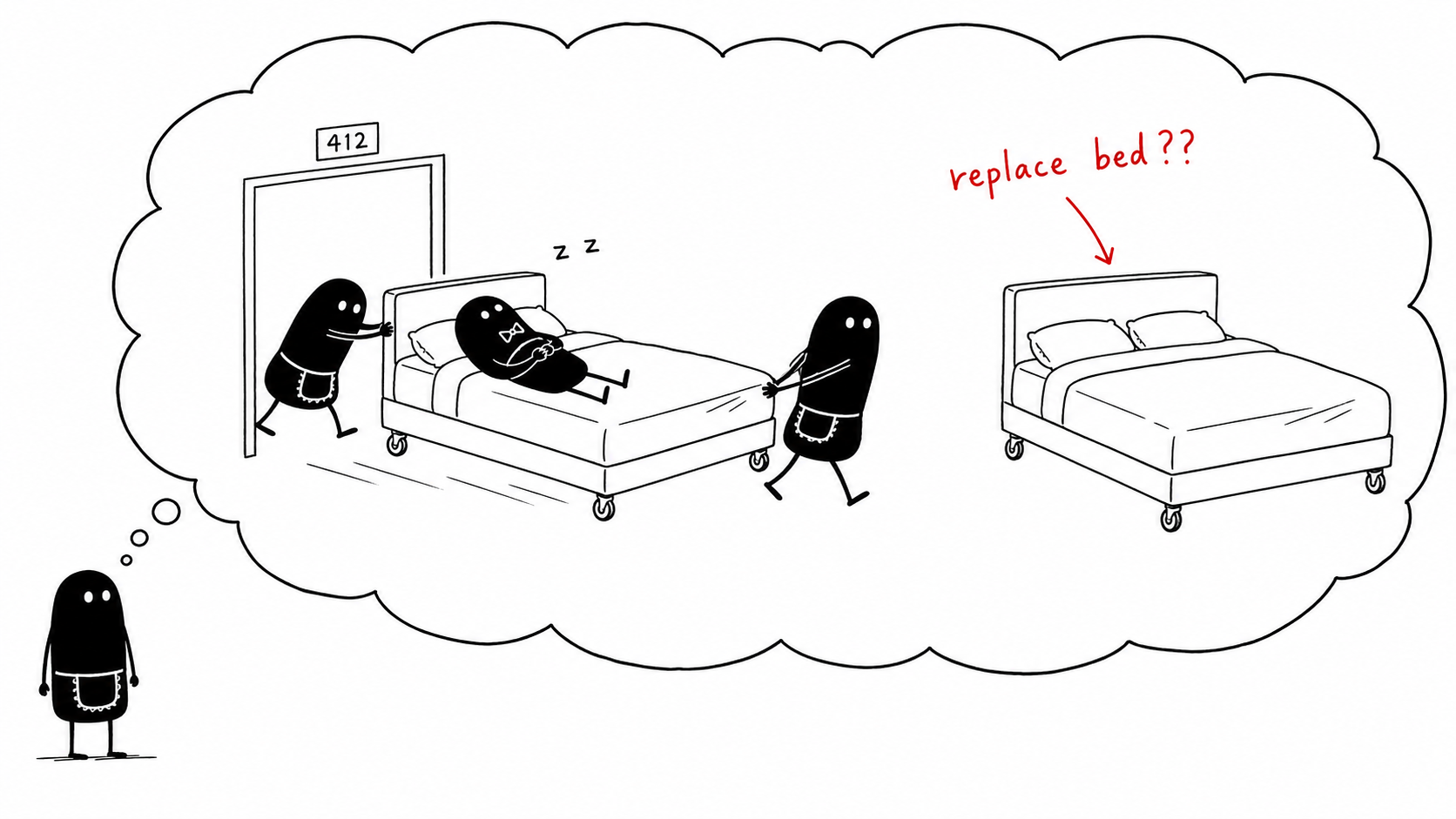
Housekeeping imagines following procedure: wheel the existing king bed out (guest still asleep on it) and wheel an identical king bed in. Two beds, indistinguishable. Nothing about the bed needed to change; only its label did.
The whole scene lives inside a thought bubble. It hasn’t happened. It’s a preview.
Terraform: this is the
terraform planoutput:- destroy / + createon infrastructure that didn’t change. The plan is the disaster shown to you before it happens. Reading it is the whole job.
Act IV: The Fix
9. The slip
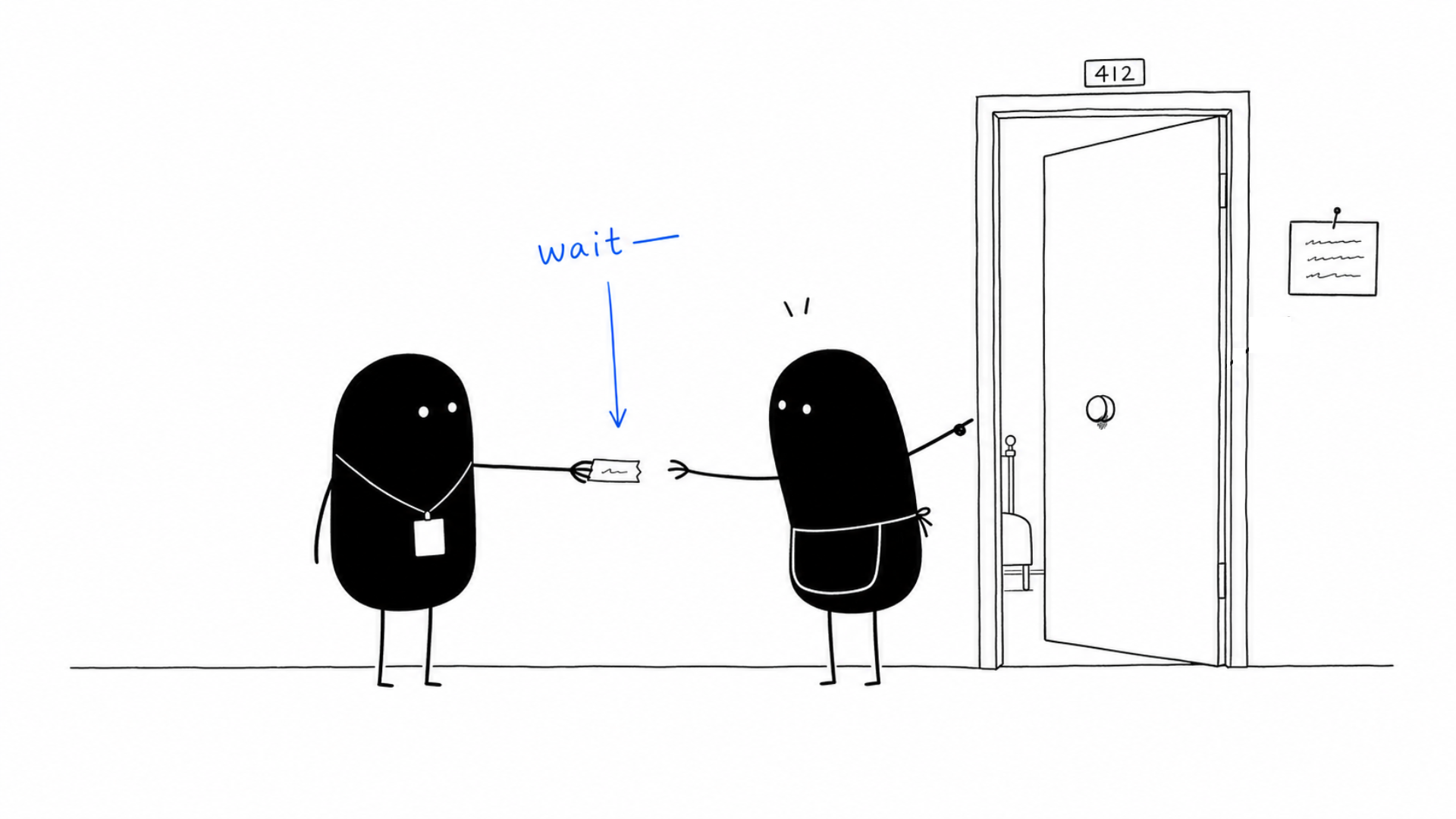
The engineer delivers a small slip of paper to housekeeping, who points back at the card: is this about that? The fix isn’t a better card. The card was already correct. The fix is telling the tool how the old name maps to the new one.
Terraform: you ship the rename to the tool with a
movedblock (orterraform state mv).
10. Same bed, update records only
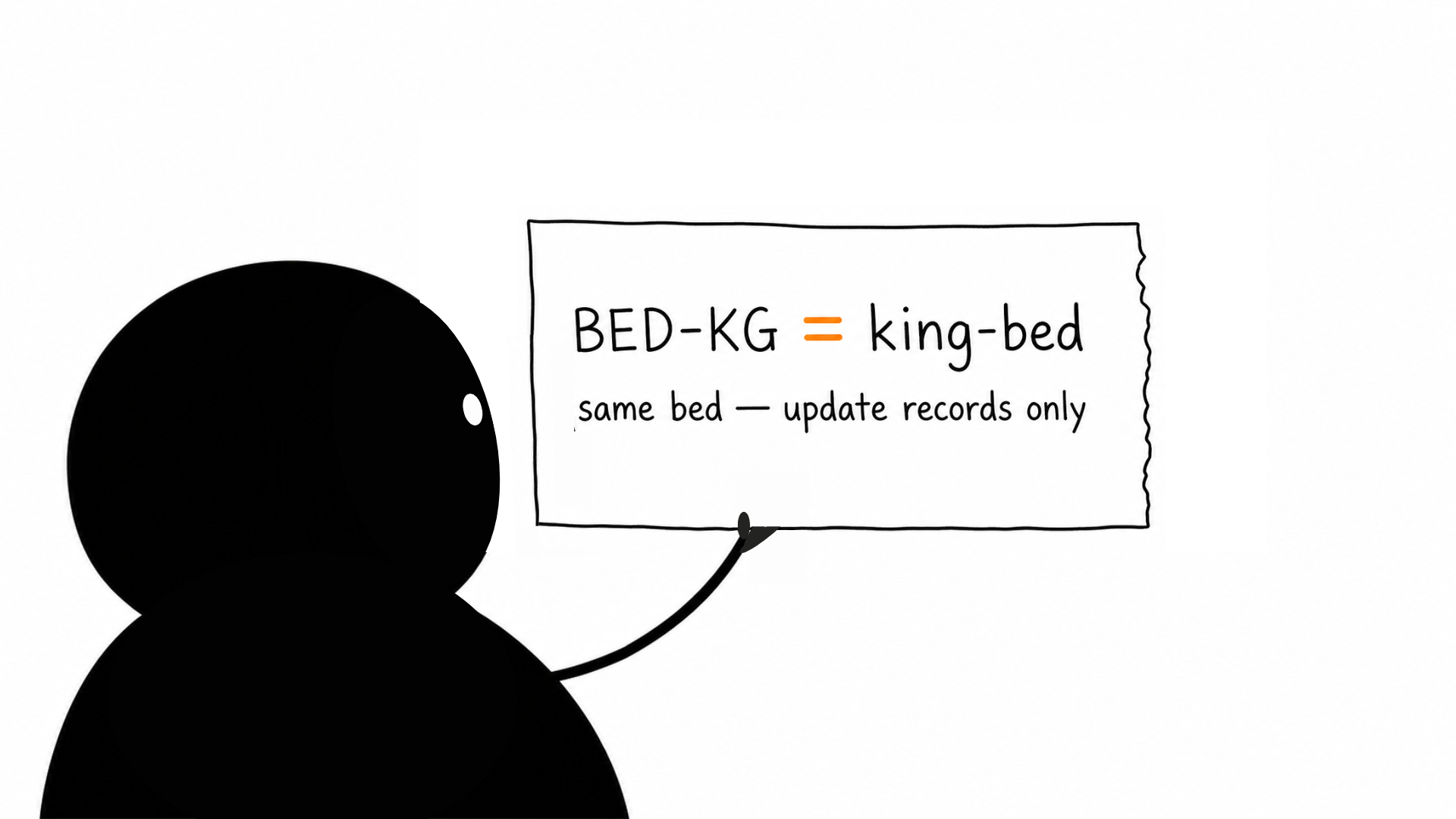
Over housekeeping’s shoulder, the slip reads:
1
2
BED-KG = king-bed
same bed — update records only
Old hand on the left, new hand on the right, an orange equals sign joining them. No bed is touched; only the records change.
1
2
3
4
moved {
  from = module.old.bed_kg
  to   = module.new.king_bed
}
Terraform: the
movedblock re-addresses the existing resource in state. The next plan sees one bed with an updated name, not a destroy-and-create.
11. Nothing to change ✓
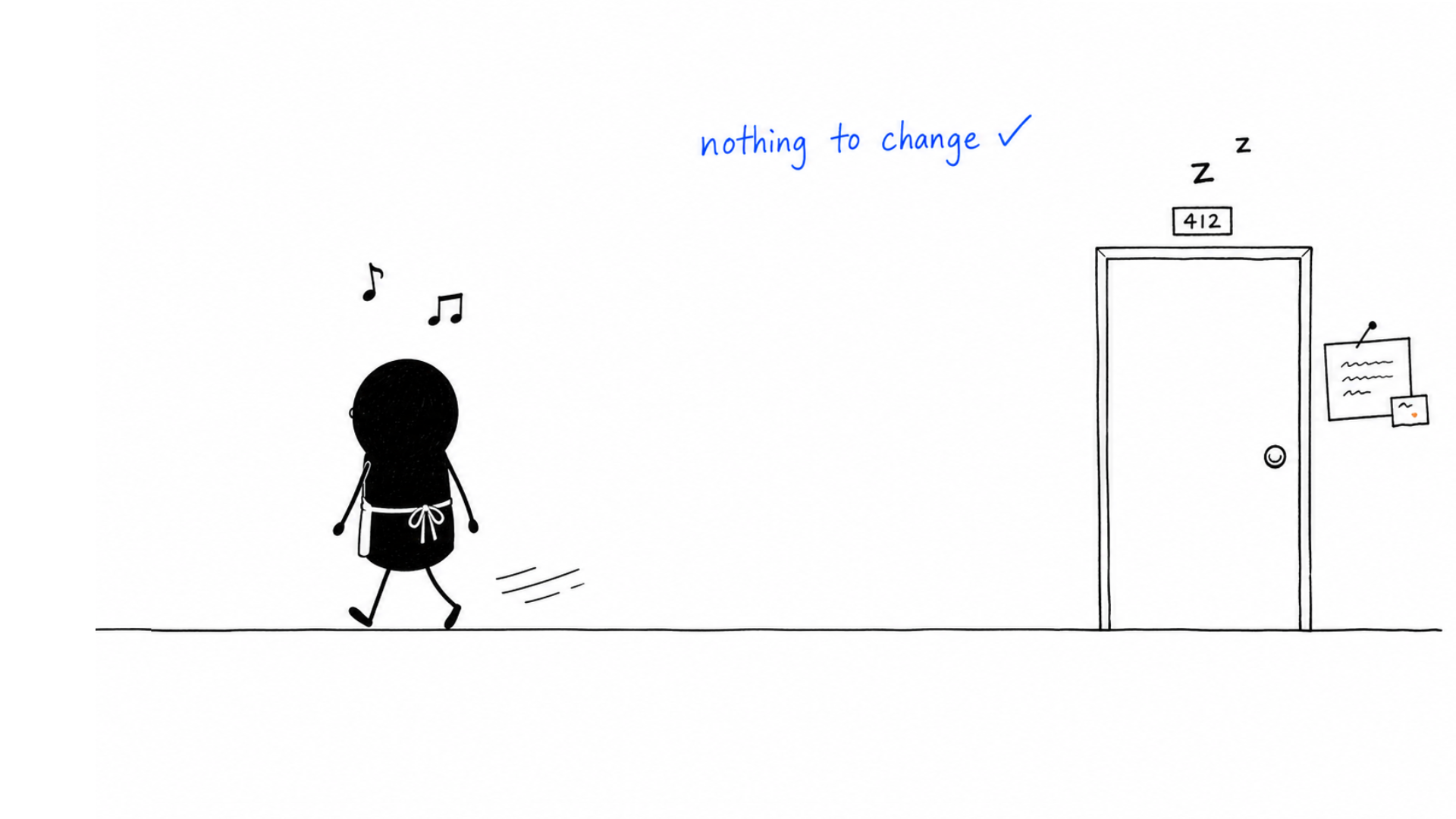
Rounds complete. The door is closed, sleep drifting out over the “412” plate; the KOCH card hangs on the wall with the slip pinned to its corner. Housekeeping walks away whistling, hands empty. No red ink anywhere in the frame, for the first time since the vendor left.
Terraform:
terraform planreturns no changes. The zero-destroy plan. The guest never knew any of this happened, which was the entire point.
The Lesson
Migrating modules means renaming things on live infrastructure, not rewriting them. The three moves, in order:
- Read reality first. The live infrastructure is your reference when the vendor’s source is gone (import / state inspection).
- Read the plan as a threat model. A destroy on an unchanged resource means the tool misread a rename; never apply it.
- Ship the mapping, not just the config.
movedblocks /state mvtell the tool that old and new addresses are the same resource.
The migration is done when the plan says nothing to change, and the guest never woke up.